
Startup Architecture

Full-Cycle SaaS Development

We engineer multi-tenant, cloud-native software platforms designed to empower founders to launch faster and scale to millions of users effortlessly.

The Roadmap

Architecture for Hyper-Growth

Building a successful SaaS is more than writing code; it's about solving real-world problems through a scalable, reliable digital platform. Founders face challenges with multi-tenancy, data isolation, and global performance.

At Vybix, we solve these technical complexities. We architect products with a robust infrastructure that supports seamless onboarding, secure data management, and flexible subscription models.
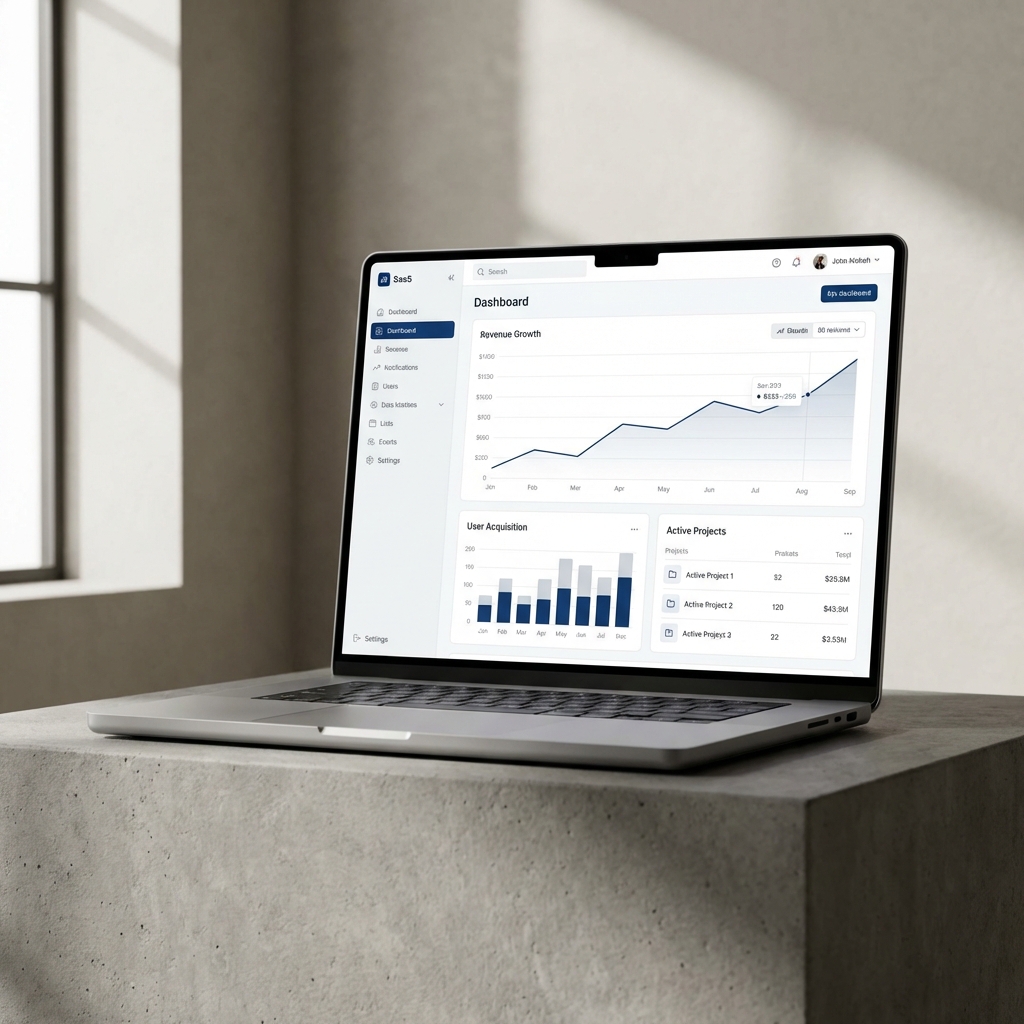
Multi-tenant SaaS architecture diagram by Vybix DevStudio — auth, tenancy, billing, observability
Core Expertise

Mission-Critical SaaS Engines

We build the essential technical foundations that power modern cloud software.

Multi-Tenancy

Securely isolate data for different organizations while sharing high-efficiency infrastructure to minimize overhead.

Subscription Tiering

Complex billing logic integration with Stripe and Chargebee for seamless recurring revenue management.

Horizontal Scaling

Infrastructure designed to handle sudden traffic spikes using cloud-native services and modern microservices.

How We Build SaaS

From discovery to a paid customer in 14 weeks.

A repeatable engineering process we have run on every multi-tenant SaaS we have shipped. Weekly demos, Friday written reports, Tuesday async reviews. You always know what is being built and why.

WEEK 01 · DISCOVERY

Architecture + scoping

30-minute discovery call. Written architecture document inside 48 hours covering the data model, tenancy strategy (schema-per-tenant vs row-level), auth flow, third-party integrations, and the explicit list of features we are NOT shipping in v1. You sign off before code is written.

WEEKS 02–03 · FOUNDATIONS

Multi-tenant skeleton

Production repository, CI/CD pipeline, staging + production environments, typed component library, RLS-isolated database, JWT-based auth with refresh tokens, and an admin dashboard scaffold. Tenant onboarding works end-to-end before any feature code lands.

WEEKS 04–09 · BUILD

Sprint-based feature build

Two-week sprints. Each one ends with a deployed demo, a written report, and a backlog re-prioritisation call. We always ship the riskiest features first so product-market fit signal arrives before the budget is gone.

WEEKS 10–11 · BILLING + GROWTH

Stripe + analytics + email

Stripe or Razorpay subscriptions with idempotent webhook handling, dunning, GST-compliant invoicing for Indian tenants, transactional email via Resend or Postmark, product analytics via PostHog or Mixpanel, and a marketing landing page tuned for SEO.

WEEKS 12–13 · HARDEN

Load test + observability

k6 load test confirming 1,000 concurrent users do not break anything, OWASP top-10 review, accessibility audit, structured logs to Logflare or Axiom, error monitoring via Sentry, and a documented incident-response runbook.

WEEK 14 · HANDOVER

Runbook + ADRs + training

Deployment runbook, architecture decision records, a 60-minute video walkthrough, and a 60-day post-launch support window. Your in-house team takes over a documented, tested codebase — no lock-in, no vendor dependency.

The SaaS Default Stack

Boring tech, fast iteration, no rewrites later.

Our default stack is the one we have shipped most often in production. We deviate only when there is a specific reason — never because something is trendy.

FRONTEND

Next.js 14 + React + TypeScript

App router, server components, edge-rendered marketing pages. SEO works by default — you do not have to bolt it on later.

BACKEND

Node.js / Python + tRPC or FastAPI

Strongly-typed APIs, OpenAPI generated automatically. Easy to integrate with web, mobile, and third-party systems without versioning headaches.

DATA

PostgreSQL + Prisma / Drizzle

Battle-tested, scales to millions of rows. Multi-tenant schema isolation via row-level security or schema-per-tenant — whichever fits your SLA.

BILLING

Stripe (global) / Razorpay (India)

Subscriptions, usage metering, dunning, invoicing — GST-compliant for Indian tenants. Idempotent webhook handling means no double-charges and no missed events.

OBSERVABILITY

Sentry + structured logs + PostHog

Error monitoring, structured logs, product analytics — wired in from week 2 so you can debug the production problem your customer just emailed about.

DEPLOYMENT

Vercel / AWS / Railway

Vercel for Next.js by default — preview deployments per pull request. AWS or Railway when you need full control. Infrastructure-as-code via Terraform or SST.

Investment Ranges

Three tiers. Real numbers. Fixed-price scope.

No "starting from" line items, no surprise change orders. We send a written fixed-price quote within 48 hours of the discovery call.

Lean SaaS MVP

Single-tenant SaaS or web app. One core workflow. Auth, dashboard, basic admin.

₹12L – ₹18L
10–12 WEEK BUILD
  • Auth + role-based access
  • One core workflow / vertical slice
  • Admin dashboard
  • Transactional email + error monitoring
  • 30 days post-launch support
Get a Lean quote

Production SaaS RECOMMENDED

Multi-tenant SaaS, billing tiers, real product analytics, mobile-responsive admin.

₹18L – ₹28L
12–14 WEEK BUILD
  • Everything in Lean +
  • Multi-tenant architecture
  • Stripe / Razorpay subscriptions
  • Product analytics (PostHog / Mixpanel)
  • k6 load test + OWASP review
  • 60 days post-launch support
Get a Production quote

Enterprise SaaS

SSO, audit logs, SOC-2 alignment, mobile app, custom integrations.

₹28L+
DEDICATED SQUAD
  • Everything in Production +
  • SSO (SAML / OIDC)
  • Audit logs + RBAC granularity
  • Flutter / React Native mobile app
  • Custom enterprise integrations
  • 90 days post-launch support
Get an Enterprise quote

Costs above are typical ranges. Specific scope adjusts the number — both ways. We will tell you if a feature is more expensive than it sounds, and we will tell you when something costs less than you expect.

Recent SaaS Work

Real founders. Real production systems.

Three SaaS platforms we have shipped — each one is live and serving paying tenants today.

TRAVEL · MULTI-TENANT

Planfri — multi-tenant travel CRM

A multi-tenant SaaS CRM for travel agencies. Next.js + PostgreSQL + Stripe subscriptions with per-agency tenant isolation. Onboarded its first paying tenant in week 11.

12-week build · live in production · paying tenants
EDUCATION · SAAS

LastSchool — institution OS

A multi-tenant school management SaaS used by institutions across Kerala. Attendance, fees, communications, parent app. Shipped in 14 weeks; serves multiple schools today.

14-week build · multiple paying institutions
FINANCE · WEB APP

Finscript — automated finance reporting

A web platform automating financial reporting for finance professionals. Document parsing, report generation, role-based collaboration. 10 weeks from kickoff to first paying customer.

10-week build · live in production
See the full portfolio
SaaS Development FAQ

The questions SaaS founders actually ask.

The same questions show up in every discovery call. Here are the honest answers we give before signing anything.

How long does it take to build a SaaS product?

A production-ready multi-tenant SaaS typically takes 12 to 14 weeks. Single-tenant lean SaaS MVPs run 10 to 12 weeks. Enterprise SaaS with SSO, audit logs, and mobile companions can run 16 to 20 weeks. Faster than 10 weeks usually means cutting corners we will not cut.

What is a multi-tenant SaaS architecture?

Multi-tenancy means one application instance serves many isolated customers (tenants). The two main approaches are row-level isolation (every table has a tenant_id, enforced by Postgres RLS) and schema-per-tenant (each customer gets its own schema). We pick based on your compliance, scale, and pricing model — RLS works for most SaaS up to a few thousand tenants; schema-per-tenant fits enterprise with strict data isolation requirements.

How much does SaaS development cost in India in 2026?

A well-scoped SaaS from Vybix runs between ₹12 lakh and ₹28 lakh depending on tier. Lean MVPs are ₹12L–₹18L. Production multi-tenant SaaS with billing tiers, analytics, and growth wiring sits at ₹18L–₹28L. Enterprise SaaS with SSO, audit logs, and a mobile app starts at ₹28L and goes up based on scope. We send a fixed-price written quote within 48 hours of the discovery call.

Do you handle Stripe billing and GST-compliant invoicing?

Yes — every SaaS we ship includes Stripe (global) or Razorpay (India) subscriptions with idempotent webhook handling, dunning, retry logic, and GST-compliant invoicing for Indian tenants. We model subscription tiers, usage limits, and proration correctly so you do not lose revenue to billing bugs.

Will the SaaS code scale, or do I have to rewrite it?

Our SaaS systems are designed to scale from your first 100 users to your first 100,000 without rewrites. Next.js or React on the frontend, Node.js or Python on the backend, Postgres for data, Stripe for billing, Vercel or AWS for deployment. The codebase is documented, tested, and ready to hand off to your in-house team once you raise. No throwaway code.

What do I own at the end of the build?

You own everything: the source code, the cloud accounts (AWS, Vercel, Stripe, Sentry — all under your name), the design files, the documentation, and every byte of customer data. We hand over a Git repo, a deployment runbook, architecture decision records, and a 60-day support window. No vendor lock-in.

Founder Ready?

Let's Launch Your SaaS Vision

Discuss your product roadmap with our SaaS specialists. We'll architect your journey from MVP to enterprise scale.